



12 Jun Do Murals Add Historic And Monetary Value To A Home?
The Historical Importance of Murals
For centuries, murals and decorative wall paintings have played an important role in the interiors of prestigious buildings.
During the middle Ages, tapestries were often the principal form of decoration in grand houses and castles, while the leading artists of the period were commissioned to create murals in churches, abbeys and cathedrals. These large-scale works were not only decorative but also conveyed status, wealth and cultural importance.
It was during the Renaissance that we began to see some of the greatest artists creating murals and decorative schemes for wealthy patrons, merchant princes and aristocratic families. From that point onwards, murals became increasingly associated with both grand public buildings and prestigious private residences.
As a modern-day mural artist in London, I am fortunate enough to work in a wide variety of properties, ranging from historic country houses and listed buildings to contemporary homes in London, the Home Counties and abroad.
Do Murals Add Value to a Home?
This is one of the questions I am asked most frequently.
The simple answer is yes—but only when the mural has been thoughtfully designed and expertly executed.
A successful mural project should take into account:
● The architecture of the room
● Existing natural light
● Interior design and furnishings
● Sight lines and proportions
● The personality of the homeowner
When these factors are carefully considered, a mural can transform a room in a way that conventional decoration cannot.
As a mural painter in London, I often find that clients are looking for something that gives their home individuality and character. A well-designed mural becomes part of the architecture itself and can make an interior feel larger, more elegant and more memorable.
The Value of Trompe l’Oeil Murals
One of the most effective ways to enhance an interior is through the use of trompe l’oeil painting.
A well-executed trompe l’oeil mural can:
● Create the illusion of additional space
● Introduce architectural features where none exist
● Enhance natural light
● Add grandeur to smaller rooms
● Create a sense of depth and atmosphere
When designed sympathetically, a trompe l’oeil mural can significantly elevate the appearance of a property and contribute to its perceived value.
However, the success of any mural project depends greatly upon the relationship between the client and the mural artist. The best results occur when there is a genuine collaboration and a shared understanding of the vision for the space.
Chinoiserie Murals and Decorative Value
Not every mural needs to create architectural illusion.
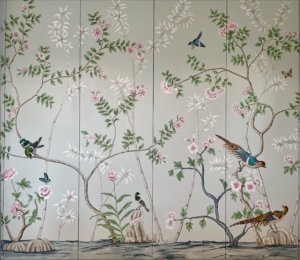
Many of the most sought-after mural commissions today are decorative in nature, particularly chinoiserie murals.
The enduring popularity of the chinoiserie style lies in its ability to introduce elegance, narrative and visual interest while remaining timeless. A carefully designed chinoiserie mural can transform an otherwise ordinary room into something distinctive and highly personal.
In my experience, a well-executed chinoiserie mural almost always enhances both the enjoyment and desirability of a property.
Do Murals Add Historic Value to a House?
In some cases, murals can become part of a property’s history. Throughout history, many important buildings have gained significance through the addition of decorative schemes, painted ceilings and murals commissioned by successive generations of owners.
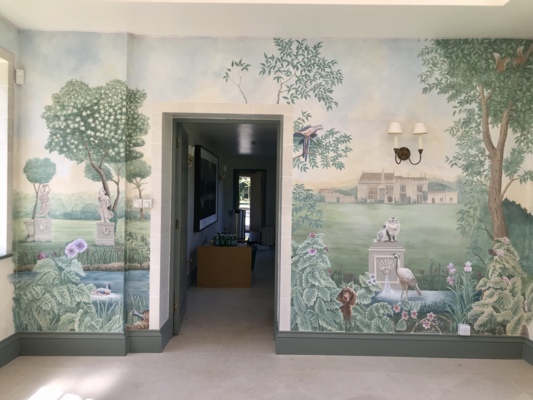
Recently, I completed a major mural project in a Grade I listed manor house, a project that I will discuss in greater detail in a future blog.
The house has existed in one form or another for nearly one thousand years. Although altered over the centuries through rebuilding, fire damage and changing tastes, it remains a remarkable example of Gothic architecture.
Can You Paint a Mural in a Listed Building?
Another common question is whether planning permission is required.
In many cases, interior decorative painting does not require planning permission, even within a listed building, provided that no alterations are made to the exterior and no historic fabric is damaged or removed.
However, every listed building is different, and owners should always seek professional advice regarding their specific circumstances before undertaking any major work.
A Modern Mural in a Historic Manor House
When I was first approached regarding the manor house mural project, I had already completed a trompe l’oeil ceiling commission in the client’s London residence. As a result, we had developed a strong working relationship and a clear understanding of the aesthetic direction for the project.
The mural took approximately four months to complete and was inspired by historic tapestries already present within the house. It also incorporated architectural references from the building itself, helping the artwork feel rooted in its surroundings.
At the same time, the mural included more personal elements, including references to the owners’ cats and dogs hidden within the composition.
This combination of historical inspiration and contemporary storytelling allows a mural to bridge different periods of a building’s life. Rather than simply imitating the past, it becomes part of the continuing history of the house.
The mural was signed and dated, leaving a permanent record of its creation and adding another chapter to the story of the manor.
Conclusion
A well-conceived mural can add far more than decoration to a home. Whether through a decorative chinoiserie mural, an immersive trompe l’oeil scheme or a bespoke mural project tailored to a particular property, the right artwork can enhance architecture, create atmosphere and increase the individuality of a space.
In some cases, murals can also become part of the historical narrative of a building, enriching its story for future generations.
For this reason, a thoughtfully designed mural should be viewed not simply as decoration, but as an investment in the character and identity of a home.
Ready to enhance your home with a custom mural? From decorative wall paintings and chinoiserie murals to trompe l’oeil commissions, contact today to discuss your project and receive expert guidance
Frequently Asked Questions
Q.Do murals increase the value of a house?
A. A professionally designed mural can increase a property’s appeal, individuality and perceived value, particularly when it enhances the architecture and complements the interior design.
Q.Are murals fashionable?
A.Murals have existed for centuries and continue to be commissioned in both traditional and contemporary interiors. Styles such as chinoiserie and trompe l’oeil remain particularly popular.
Q.Can you paint a mural in a listed building?
A.In many circumstances, interior murals can be painted within listed buildings, although owners should always seek appropriate advice regarding their specific property.
Q.How long does a mural project take?
A.Every project is different. Smaller decorative murals may take a few days, while larger bespoke commissions can take several months.
Q.How do I commission a mural?
A.If you are considering a mural for your home, country house or commercial property, please contact me through the website to discuss your ideas and the possibilities for your space.
No Comments