



10 Jun A Belgravia Mural Project: Creating Character In An Entrance Vestibule
When a Mural Is the Best Solution for a Space
As a mural artist in London, I am often asked to solve decorative problems that cannot easily be addressed with paintings, furniture or architectural alterations. My most recent mural project was in Belgravia, London, for an avid art collector whose house is filled with paintings, sculptures and decorative objects.
The client is ranked among the world’s leading art collectors, and every room in the house reflects a deep appreciation for art. The challenge was to create a mural that would sit comfortably within this remarkable collection while adding something unique to a relatively small entrance vestibule.
Many of my residential mural projects involve finding creative solutions for architectural spaces that are difficult to decorate using conventional artwork.
The Challenge of the Space
Historically, a vestibule served as an antechamber where visitors could remove muddy boots before entering the main house. It also acted as a buffer against draughts from the street.
From a mural painter in London perspective, the space presented several challenges:
● Arched windows above the entrance door
● A side window on one wall
● A large mirror on the opposite wall
● Several small, irregular areas requiring decoration
● Limited wall space for conventional artwork
These awkward architectural spaces are often where a bespoke mural can have the greatest impact.
Developing the Mural Design
The client already had some initial concepts prepared by a designer, including foliage, monkeys and various creatures. Having worked with the client before, I knew he appreciated humour and storytelling within his collection.
One of the most rewarding aspects of being a mural artist is finding ways to make a project personal. The concept behind a mural is often just as important as the painting itself. A successful mural should respond not only to the architecture of the room but also to the personality of the client.
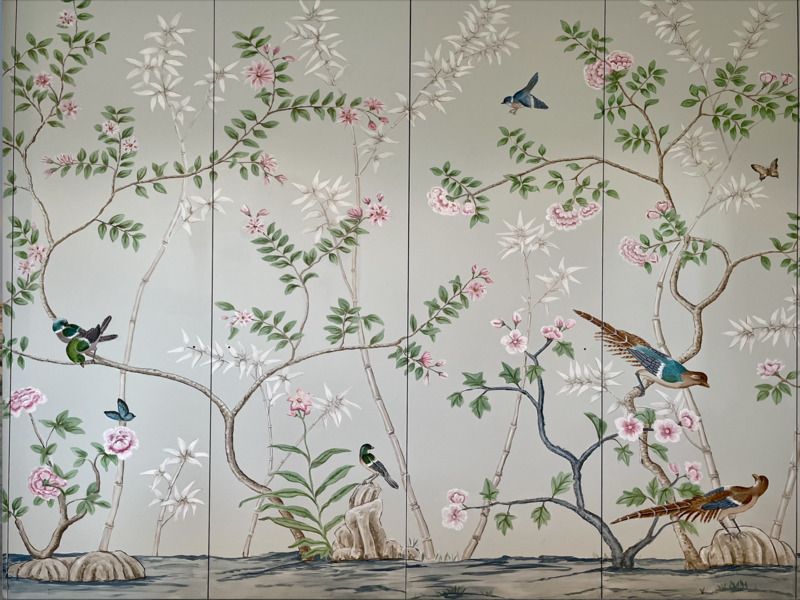
This approach is equally important whether creating decorative wall paintings, chinoiserie murals, or more complex trompe l’oeil murals, where the artwork must feel completely at home within the space.
Creating Mischievous Monkey Characters
For this London mural project, I decided to give the two monkeys distinct personalities.
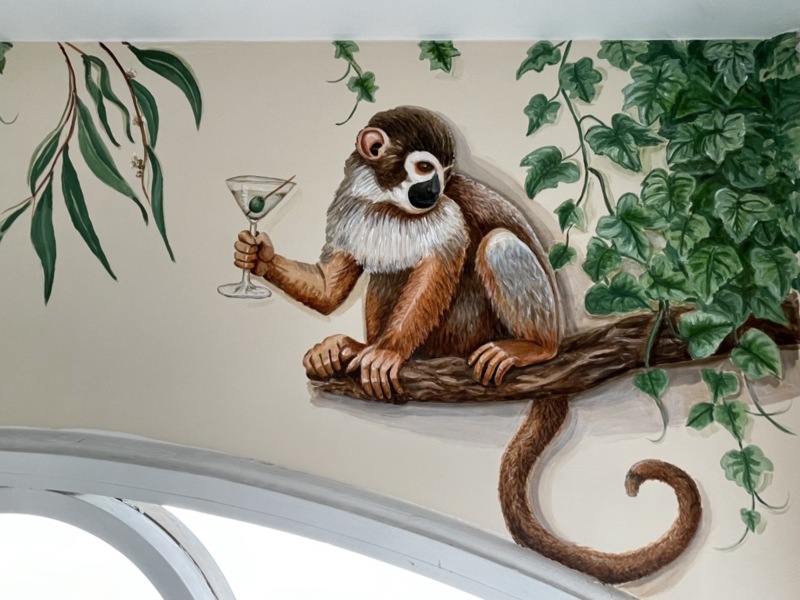
The Martini-Drinking Monkey
Above the street entrance door sits a monkey enjoying a martini while observing an iguana positioned across the vestibule. This immediately introduces a sense of humour and encourages visitors to look more closely at the mural.
The Key-Thieving Monkey
Above the entrance to the main hall, a second monkey has stolen the key to the house. He proudly brandishes it while looking directly at the viewer, creating a playful interaction with anyone entering the space.
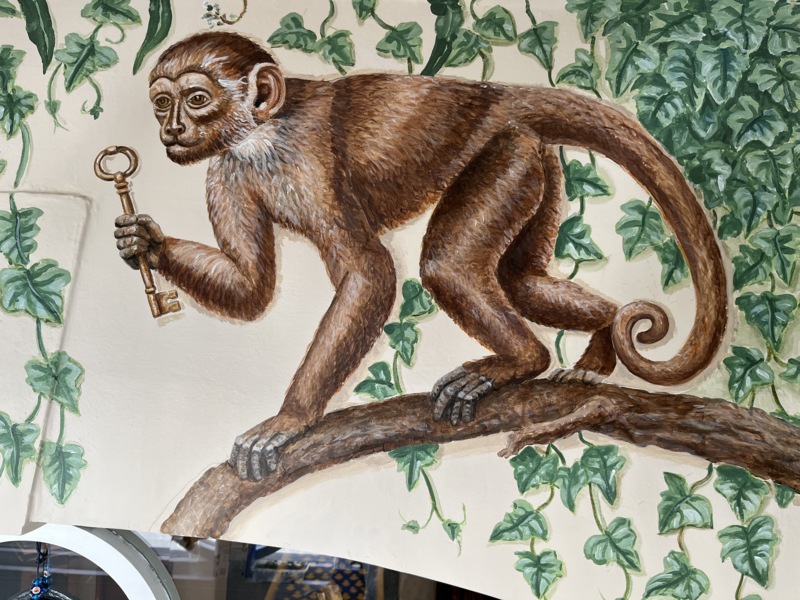
These narrative details help transform a decorative mural into something more engaging and memorable.
The Ceramic Tile-Carrying Ant
One element of the mural references the client’s passion for collecting ceramics.
The house contains many beautiful ceramic pieces, so I painted a large ant carrying a decorative tile strapped to its back. This idea is one I have used successfully in previous mural projects and will discuss in more detail in a future blog post
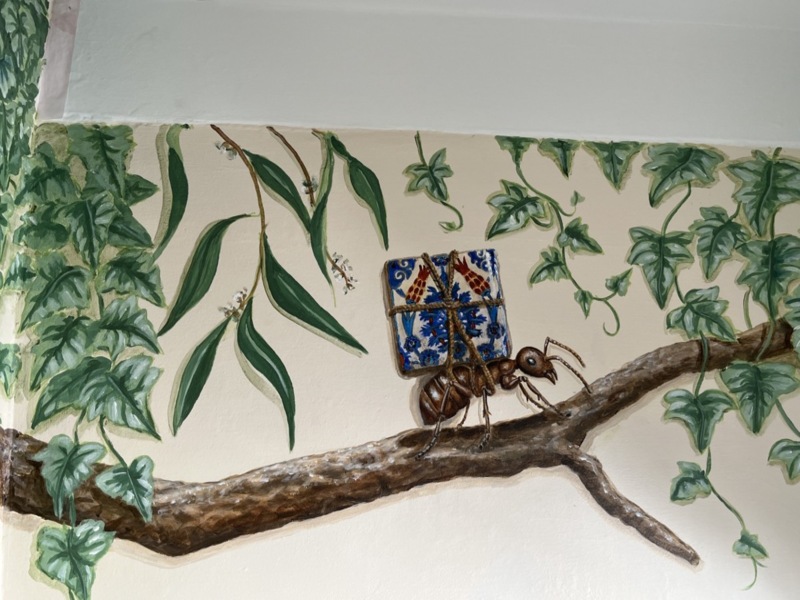
I enjoy painting ants because they are capable of carrying objects many times their own weight, making them ideal characters for visual storytelling within a mural.
The Iguana and Other Details
On another wall, I painted an iguana looking curiously upwards towards a dragonfly flying overhead.
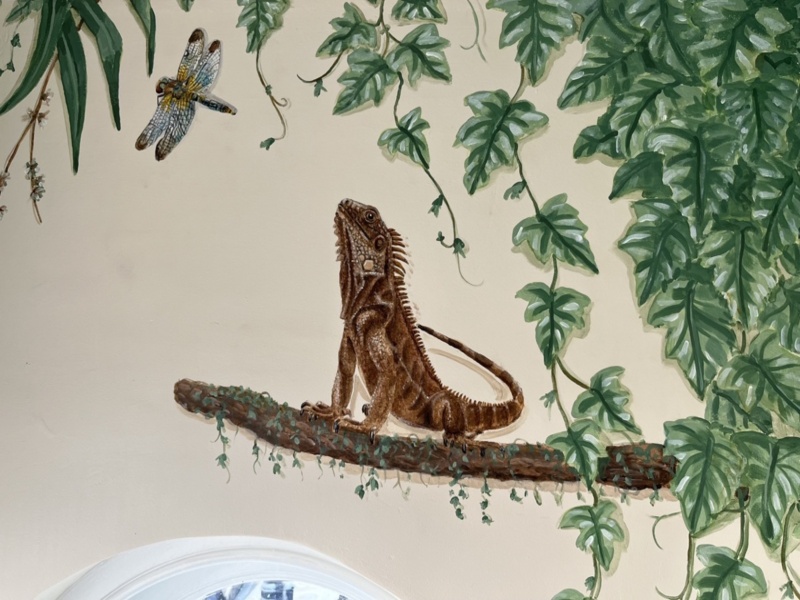
To bring interest to some of the smaller spaces, I also included:
● A snail
● A beetle
● Additional foliage
● Smaller decorative details that reveal themselves over time
The foliage helps connect the various elements while softening the transitions between the windows, mirror and architectural features.
Why Bespoke Murals Work So Well in Difficult Spaces ?
As a mural painter in London, I frequently encounter areas that are difficult to decorate successfully with traditional artwork.
Murals can be designed specifically for:
● Entrance halls
● Staircases
● Vestibules
● Ceiling spaces
● Period properties
● Contemporary interiors
● Awkward architectural features
Because the design is created for the exact dimensions of the room, the artwork becomes part of the architecture rather than simply hanging upon it.
The Finished Mural
The completed mural transformed what could have remained an awkward transitional space into an engaging and humorous environment that reflects both the architecture of the house and the personality of the owner.
For me, this is one of the most satisfying aspects of mural painting. A successful mural should not only decorate a room but also tell a story, reward close observation and create a connection with the people who live there.
If you are considering a mural for your own home, whether a decorative wall painting, a chinoiserie scheme or a trompe l’oeil commission, please contact to discuss your project in detail.
Frequently Asked Questions
Q. What is the difference between a mural and traditional artwork?
A. Unlike a painting that is hung on a wall, a mural is designed specifically for the architecture and proportions of a space. It becomes an integral part of the room.
Q. How long does a mural project take?
A. Most mural projects take between several days and several weeks, depending on size, complexity and location.
Q. Do you work outside London?
A. Yes, Although much of my work is in London and the South East, I undertake commissions throughout the United Kingdom and internationally.
Q. Can murals be designed around a client’s interests?
A. Absolutely. Many of the most successful mural projects incorporate personal references, collections, hobbies or aspects of the client’s life, creating something that could not exist anywhere else.
Q. How do I commission a mural?
A. The first step is usually an initial conversation about the space, followed by photographs, measurements and a discussion of possible ideas. You can contact me through the website to begin the process.
No Comments