



16 Jun How A Contemporary Mural Can Add To The Story Of A Historic Building
Creating a bespoke mural within a Grade I listed manor house in the Cotswolds
A House with Nearly One Thousand Years of History
One of the greatest privileges of being a mural artist is the opportunity to work within buildings that have witnessed centuries of history.
This particular commission took place in the manor house of Down Ampney, a small Cotswold village perhaps best known as the birthplace of the composer Ralph Vaughan Williams. Yet the history of the manor itself reaches back far beyond the nineteenth century.
The estate is first recorded in the thirteenth century and was granted by Edmund, Earl of Lancaster, son of King Henry III, to Sir Nicholas de Villiers in 1270. The manor later passed to the Hungerford family, who remained Lords of the Manor until the mid-seventeenth century and were responsible for many of the Gothic additions that still define the building today.
Over subsequent centuries the house passed through various distinguished families, including the Eliot family, Earls of St Germans. Following a series of fires and alterations, the renowned architect Sir John Soane made important modifications to the building around 1799, introducing Gothic details that remain visible today.
As a result, the manor presents a fascinating architectural dialogue between periods. The principal frontage retains its Gothic character, while the rear of the house reflects the elegance and restraint of the Georgian era.
Adjacent to the house stands All Saints Church, founded by the Knights Hospitaller in 1265. Following outbreaks of plague, much of the original village gradually moved away from the immediate vicinity of the church and manor, leaving behind an unusually evocative historic setting.
Today, the house is recognised as a Grade I listed building and remains one of the architectural treasures of the region.
The Beginning of the Commission
My relationship with the owners began not in the Cotswolds, but in London. Several years earlier I had been commissioned to create a trompe l’oeil ceiling mural in the dining room of their Notting Hill residence. The project proved highly successful and, perhaps more importantly, established the trust that is essential for any significant decorative commission.
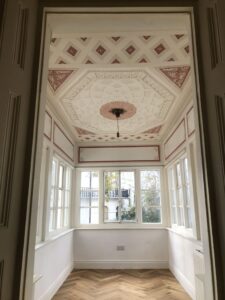
The following year I received another invitation from the same clients, this time to visit a newly acquired property in the Cotswolds.
After being shown through the house and learning more about its remarkable history, I was introduced to a conservatory that linked the older Gothic section of the manor with a later Georgian extension.
The room occupied a unique position within the building. One side overlooked a secluded garden, while the other enjoyed views towards the sweeping entrance drive. Bathed in natural light from a glazed roof, it was intended to become a peaceful retreat where the owners could sit, relax and enjoy the surrounding landscape.
The question was how to create a mural that would feel entirely at home within such a historic setting.
Drawing Inspiration from the House Itself
When working within a historic building, it is important that a mural feels as though it belongs to the architecture rather than competing with it.
Among the decorative treasures already present in the manor were several large tapestries whose muted colours, stylised birds and representations of nature immediately caught my attention. Although created centuries earlier, they possessed a timeless quality that seemed perfectly suited to the atmosphere of the house.
These tapestries became an important source of inspiration.
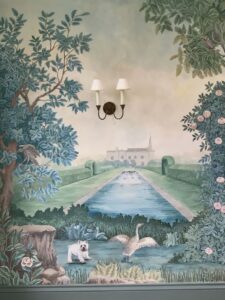
My aim was not to imitate them directly, but to absorb their spirit and reinterpret it through a contemporary mural that could sit comfortably alongside them.
The challenge was to create something that felt historic without becoming theatrical, contemporary without appearing fashionable, and personal without disturbing the integrity of the building.
Incorporating the Owners’ Story
One of the aspects I enjoy most about bespoke mural commissions is the opportunity to weave elements of a client’s life into the design.
Historic houses are not museums. They continue to evolve through the generations that inhabit them, each owner contributing another chapter to an ongoing story.
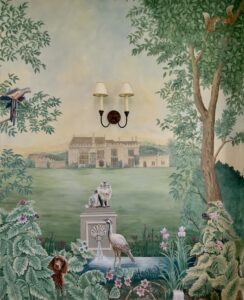
To gain a deeper understanding of the family and their relationship with the house, I asked them to share photographs of their favourite views, areas of the garden, architectural details and beloved pets. We also discussed symbols, heraldic references and features associated with the estate itself.
Equally important was understanding what they did not wish to include.
These conversations often reveal subtle details that ultimately become some of the most meaningful elements within a mural.
Developing the Design
Using photographs of the manor, its gardens, historic tapestries and personal references supplied by the owners, I spent several weeks developing scaled drawings for the room.
Every aspect of the conservatory had been carefully measured and photographed, allowing the designs to be created specifically for the architecture.
The completed proposals were presented to the clients and approved without alteration. Their enthusiasm confirmed that we had found the right balance between the history of the house and their own connection to it.
The Painting Process
Before work could begin, the room required careful preparation.
A skilled decorator prepared all surfaces using a neutral water-based eggshell finish, creating a stable foundation for the mural. When working within a historic property, it is essential that every stage is approached with longevity in mind.
We scheduled the work to begin in April and allowed a four-month period for completion.
Living within the house during this time provided a valuable opportunity to observe how the light changed throughout the day and how the room related to the surrounding landscape.
Using my scaled drawings, I projected the designs directly onto the walls, refining proportions where necessary before completing detailed line work and beginning the painting process.
Adding a New Chapter to a Historic House
By the end of the project, the mural had become something more than decoration.
The finished composition drew inspiration from the gardens, incorporated views of the manor itself and included carefully hidden references to the family’s pets and personal lives. These details remain largely invisible to casual visitors but carry special significance for the owners.
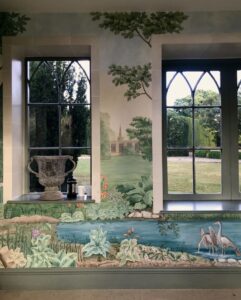
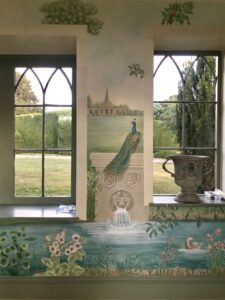
In this way the mural became both historic and contemporary.
It respected the architectural heritage of a building that has stood for centuries while quietly recording the lives of those who inhabit it today.
A Living History
Historic buildings survive because successive generations care for them, adapt them and leave their mark upon them.
A successful mural should do the same.
Rather than attempting to recreate the past, it should acknowledge the history of a place while contributing something meaningful to its future. The most rewarding commissions are those that become part of the ongoing story of a house rather than simply decorating its walls.
For this reason, the completed mural was signed and dated, providing a permanent record of its creation and ensuring that future generations will know when this chapter was added to the manor’s long and remarkable history.
Transform your space with a bespoke mural designed. Whether you are considering a decorative wall painting, an elegant chinoiserie mural, or a stunning trompe l’oeil commission, contact today to discuss your project and bring your vision to life.
Frequently Asked Questions
Q. Can a mural be painted in a Grade I listed building?
A. In many cases, decorative painting can be undertaken within listed buildings, although every property is different and owners should seek appropriate professional advice before commencing work.
Q. How do you design a mural for a historic house?
A. The process begins with understanding the architecture, history and atmosphere of the building. Existing decorative features, artworks, gardens and family history can all contribute to the final design.
Q. Can a mural include personal elements without looking modern?
A. Yes. Some of the most successful murals subtly incorporate personal references, family history or beloved pets in ways that feel entirely natural within the overall composition.
Q. How long does a large mural project take?
A. The timescale depends upon complexity and scale. This particular manor house commission required approximately four months to complete.
Q. Why commission a bespoke mural rather than use wallpaper?
A. A mural is created specifically for a room, responding to its architecture, proportions, light and history. Unlike wallpaper, it is unique to the building and can never be replicated elsewhere.
No Comments